
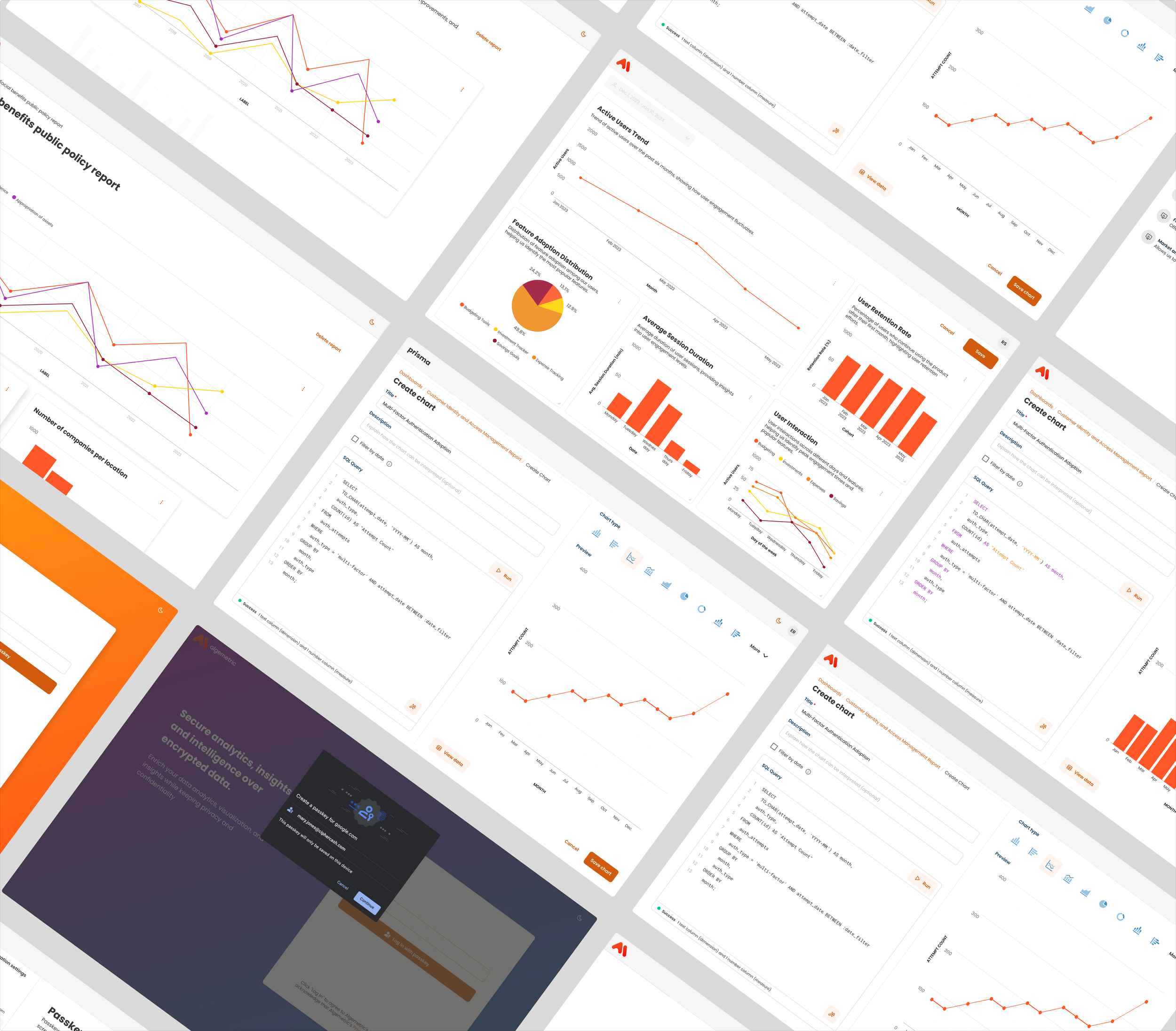
Secure BI for
Regulated Industries
Designing trust-centered data integration for privacy-first analytics
Client: Algemetric
Role: Product Designer
Team: 1 PM, 2 Designers, 4 Engineers, 2 Researchers
Project type: SaaS B2B, Web
Overview
Prisma is Algemetric’s privacy-first Business Intelligence (BI) platform that enables teams to analyze encrypted data without exposing sensitive information. Built for highly regulated sectors, Prisma provides no-code access to analytics through natural language interfaces and secure data sync.
Prisma ensures full compliance with global privacy standards like GDPR and HIPAA while empowering users to make fast, confident, and compliant decisions.
My accomplishments
At Algemetric, I led UX and Product Design for Prisma's Data Sync, Encrypted Analytics, and Privacy-Aware Dashboard experiences, transforming complex cryptographic infrastructure into simple, usable workflows.
Problem
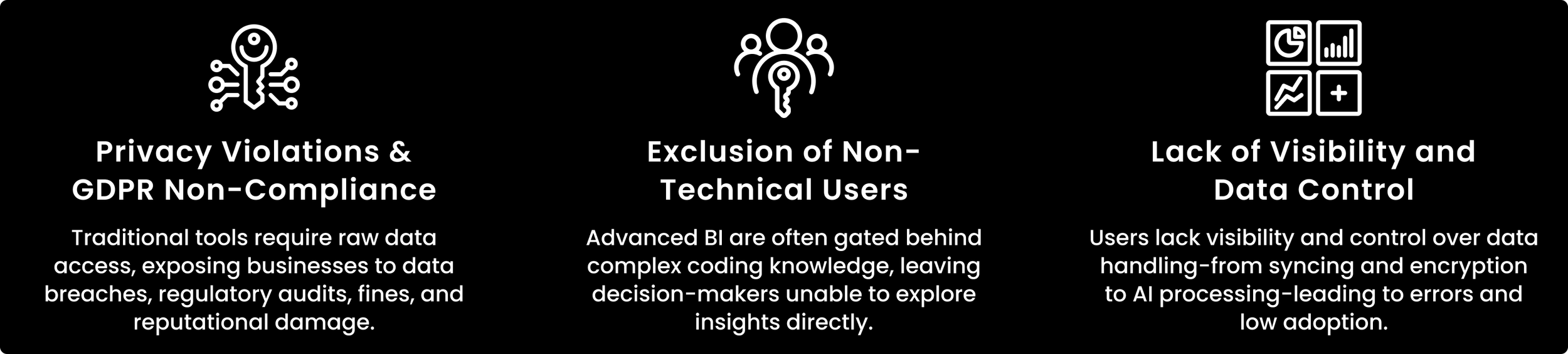
Traditional BI tools expose raw data and lack compliance controls, making them untrusted in regulated industries - especially for non-technical users.
“How might we enable teams to sync sensitive data from multiple sources into Prisma while giving them full control, transparent security settings, and a sense of confidence throughout the process?”
Solution
To address the security, transparency, and accessibility gaps in traditional BI tools, we designed Prisma as a secure, inclusive analytics platform built for privacy-first environments.

Design Strategy
To solve the pain points of secure analytics in high-compliance environments, we designed a user-centered experience that balances privacy, usability, and speed.
Key features included:
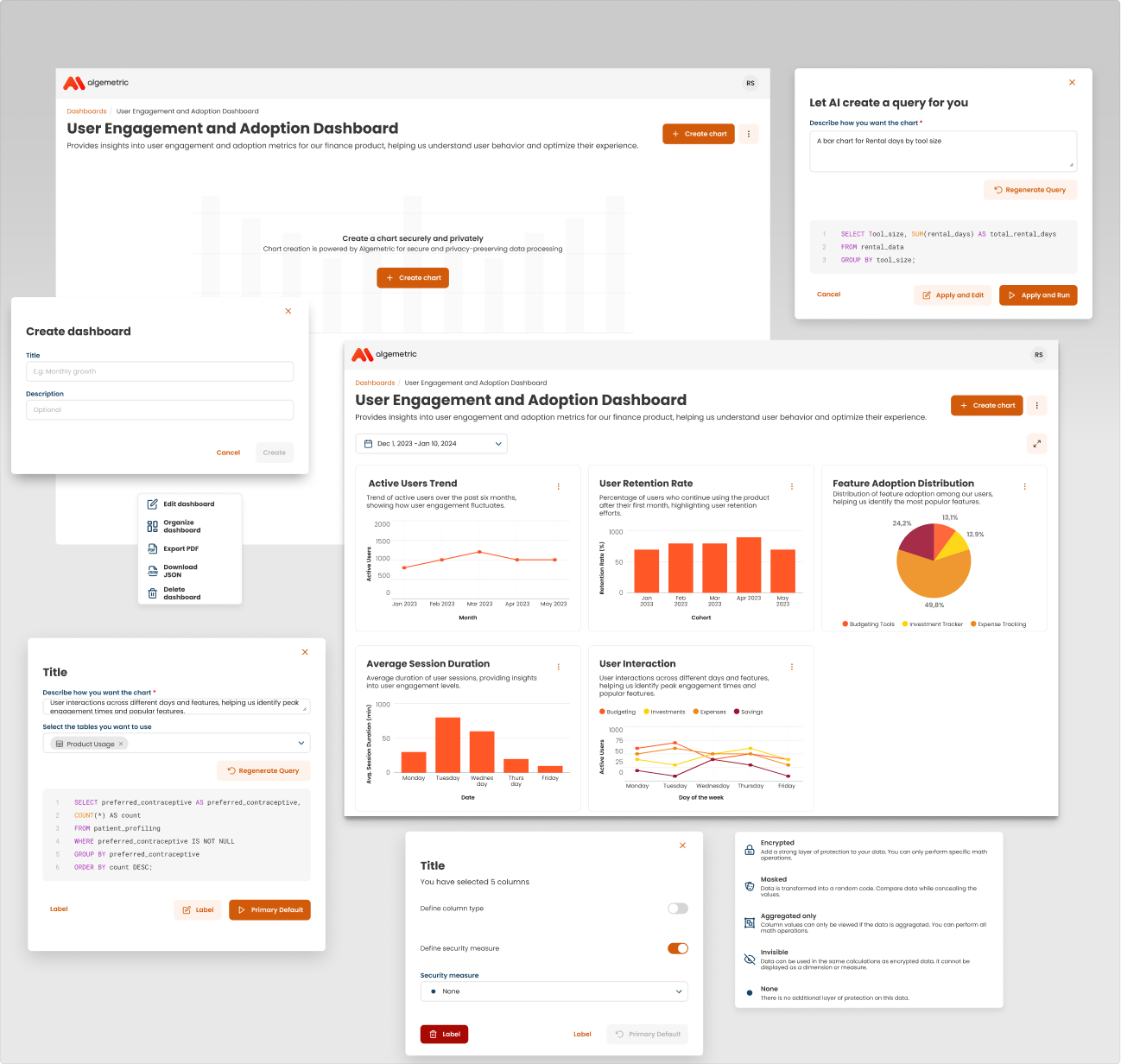
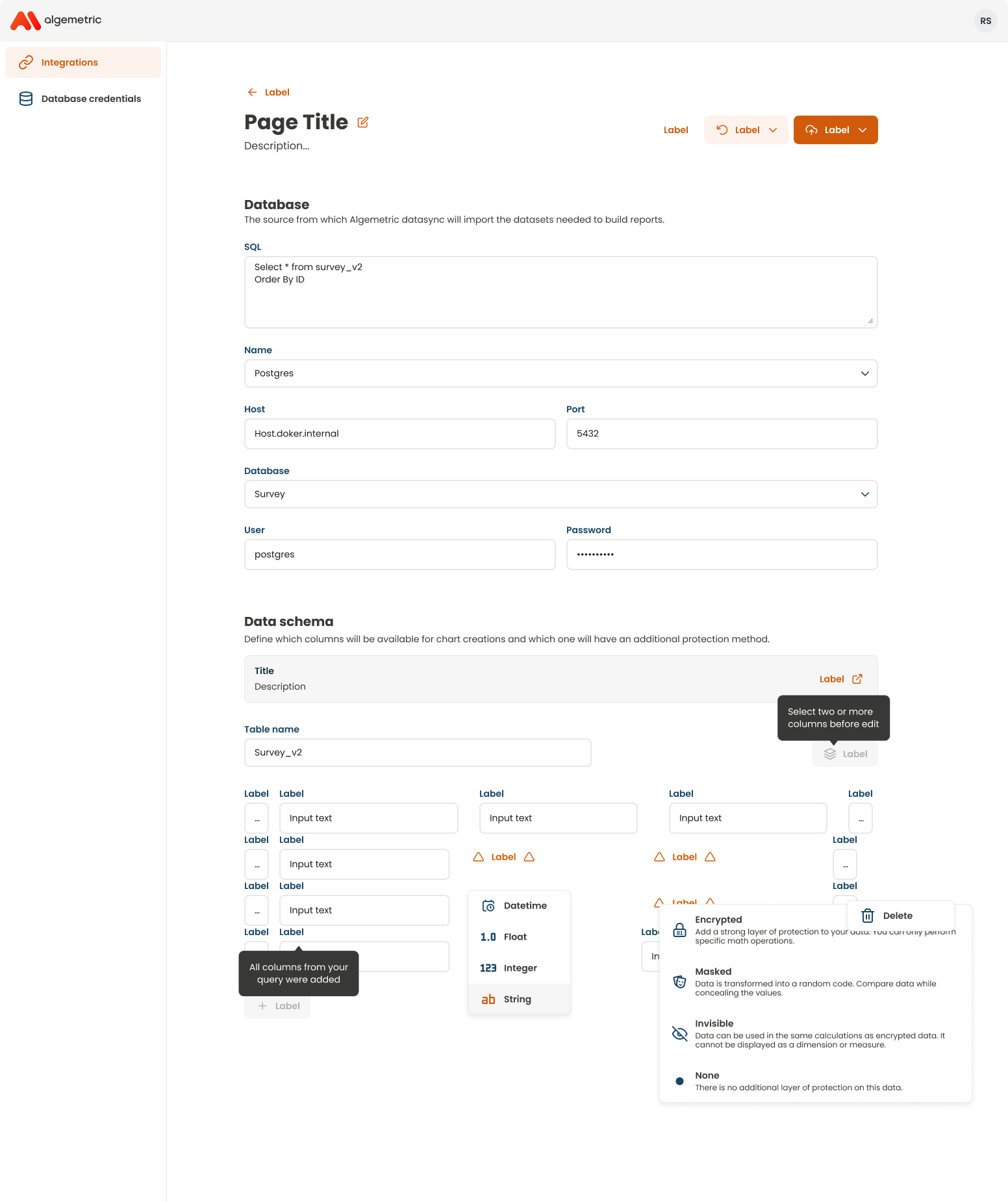
Guided Data Sync with inline privacy controls (masking, encryption, access)
Explainable NLP Queries that translate natural language into editable SQL.
Role-Based Dashboards filtered by sensitivity and user type.
Pause & Resume Sync for real-world data interruptions.
No-Code Insight Creation to reduce reliance on engineering.
User Research & Discovery
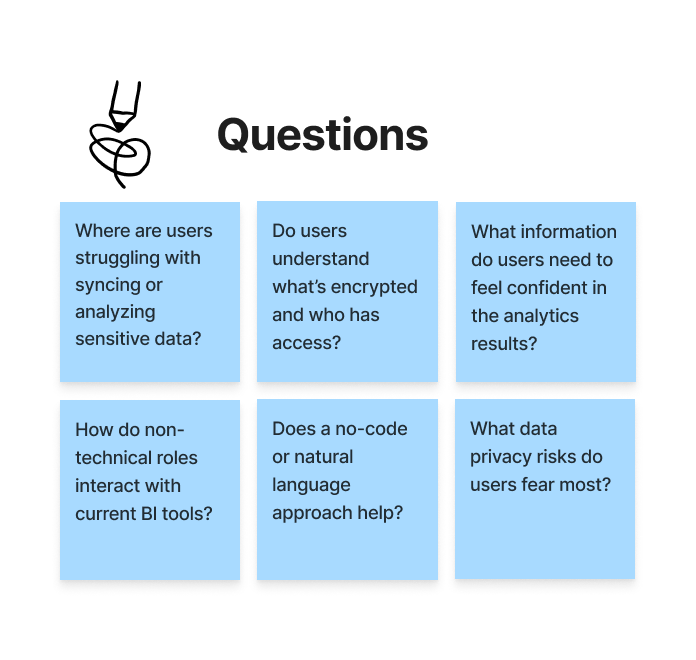
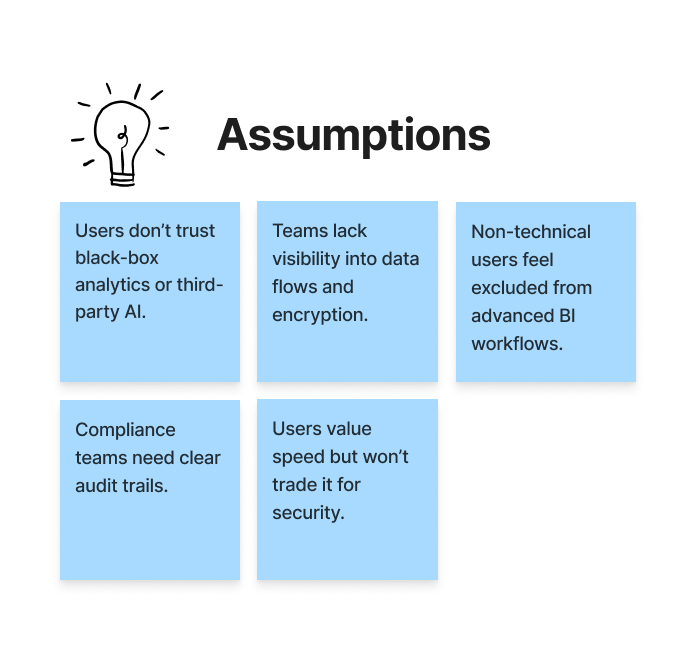
To create a product that solved real problems for privacy-conscious organizations, we needed to deeply understand user workflows, trust barriers, and compliance constraints. We began by aligning on key research questions, challenging our assumptions, and identifying actionable insights.
Methodology
Our team conducted mixed-method research:
20+ interviews with analysts, compliance officers, and data leads in finance, telecom, and healthtech
350+ person survey across the EU and US (via Pollfish)
Competitor reviews of Tableau, Metabase, ThoughtSpot, and Power BI
Shadowed onboarding calls with pilot clients like Telefonica to observe pain points directly
Hotjar & product usage tracking for behavior-based insights
Key Insights
Lack of Visibility Drives Distrust Users were unsure what data was being encrypted or shared — and when. Without visual clarity and access control, trust in analytics dropped sharply.
Non-Technical Users Are Left Behind Complex SQL-based tools intimidated operations, legal, and strategy teams. These users needed a guided, code-free way to run trusted insights.
Data Ownership is Mission-Critical Relying on third-party AI models triggered legal red flags. Users demanded confidence in how data was handled, processed, and retained.
Compliance is Not Optional Any sync or insight workflow had to prove compliance with standards like GDPR, HIPAA
By addressing these foundational pain points, we transformed fragmented workflows into intuitive, compliant experiences - enabling teams to move faster, reduce errors, and engage confidently with sensitive data.
User Persona
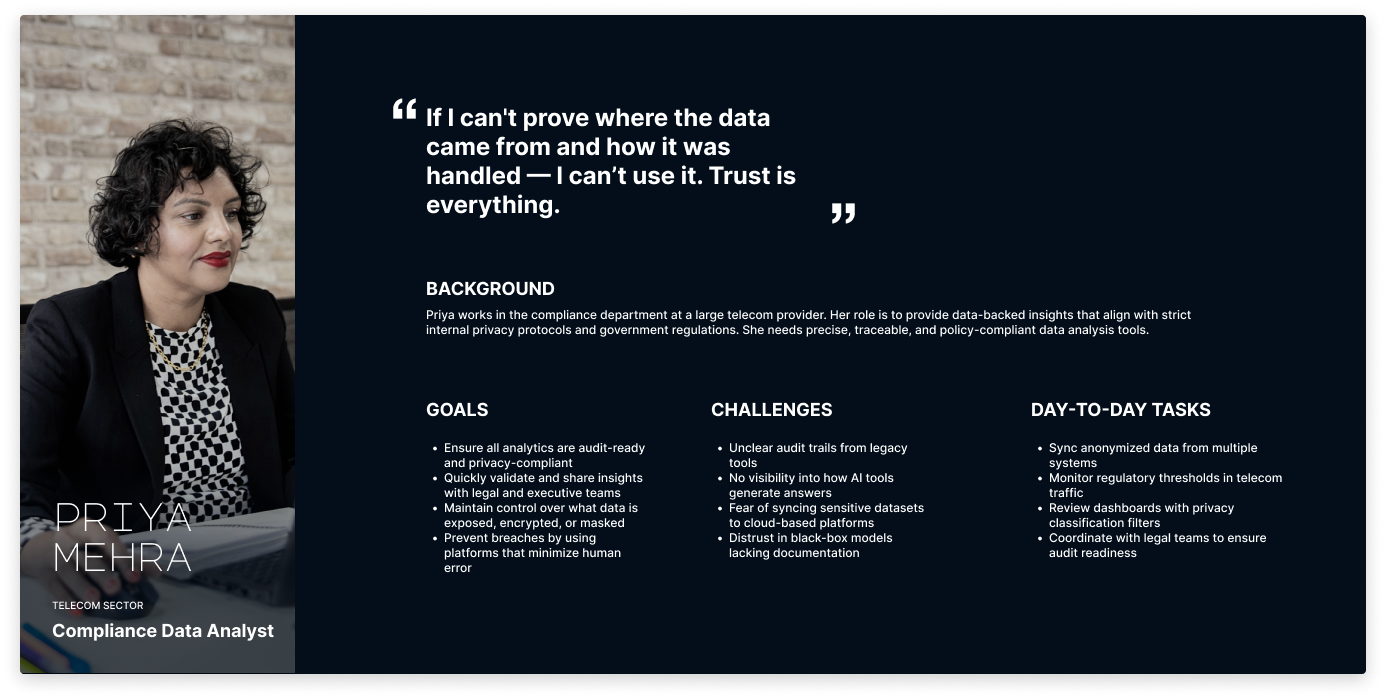
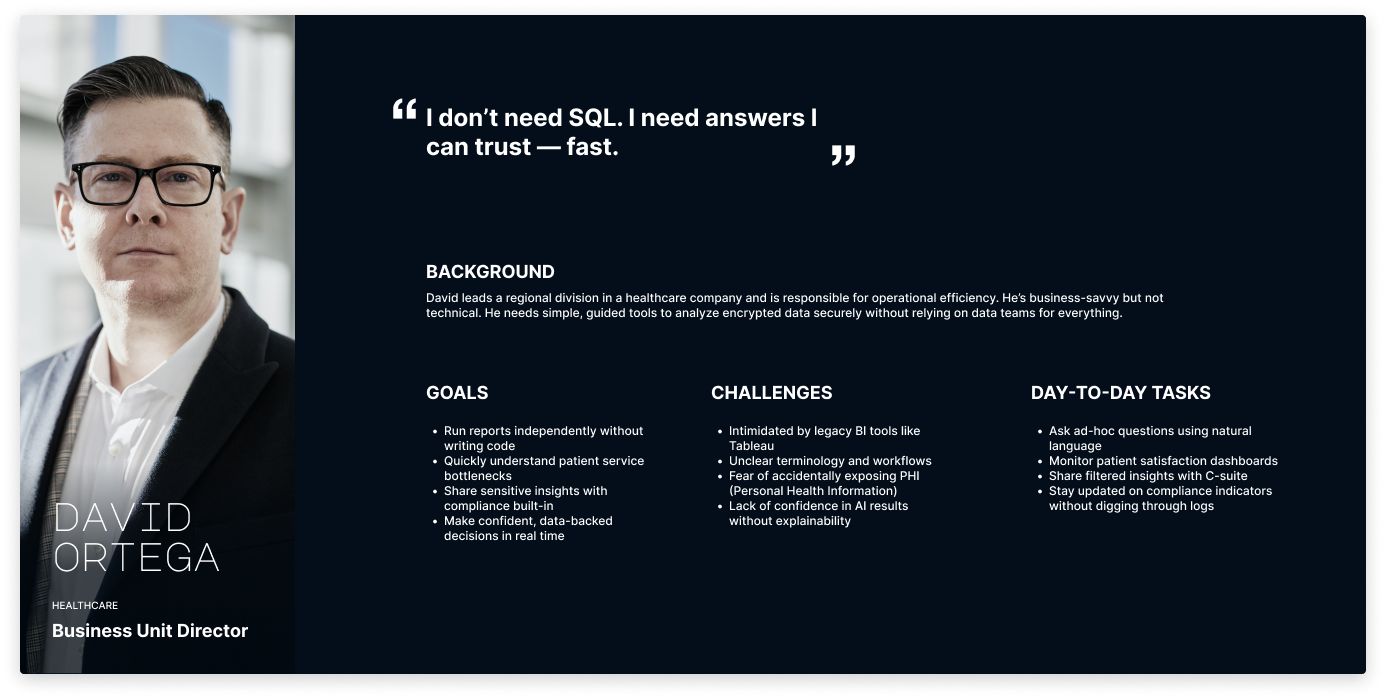
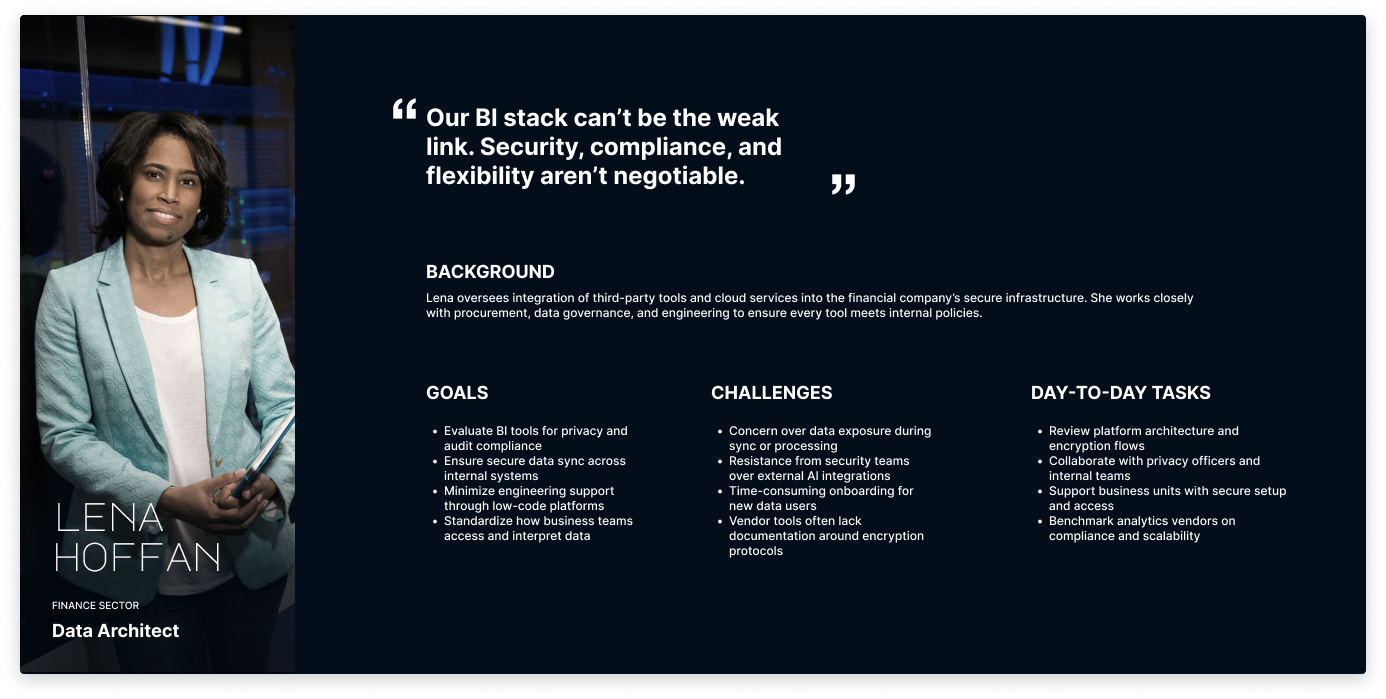
Based on our research, we identified three primary user types interacting with secure analytics workflows in high-compliance environments.
First, the Compliance-Focused Analyst is responsible for syncing sensitive data, ensuring encryption standards are met, and validating insights before reporting. Next, the Non-Technical Decision Maker relies on natural language inputs and dashboards to make fast, informed decisions without deep technical involvement. Lastly, the Enterprise IT Architect oversees system integration, privacy protocols, and long-term scalability—ensuring that any solution meets internal and regulatory requirements.
This clear understanding of roles enabled us to design experiences tailored for cross-functional collaboration and aligned with the operational realities of enterprise environments.
UI Strategy & Problem-Solving by Design
To bridge the gap between privacy compliance, user trust, and accessibility, I applied a systems-oriented design strategy grounded in three principles: progressive disclosure, context-driven guidance, and secure defaults. Each UI decision was shaped by real-world regulatory challenges, technical constraints, and non-technical user needs uncovered in research.
Privacy-Centered Onboarding
Enterprise users needed to onboard sensitive data without exposing raw records or risking misconfiguration
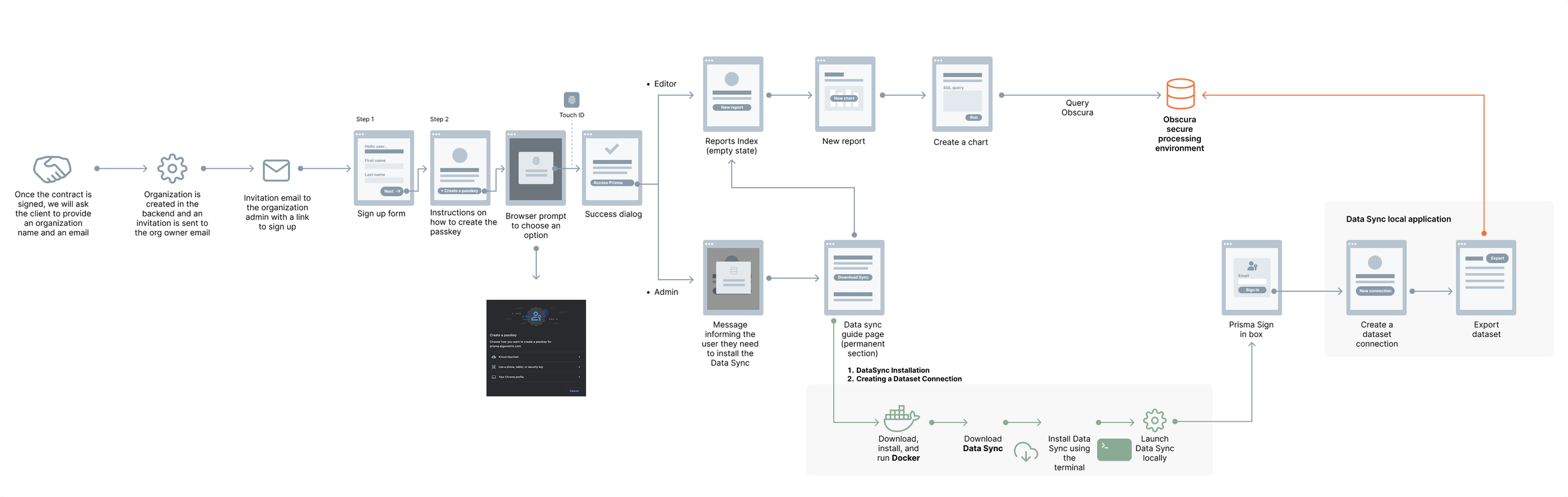
Reduced onboarding time and ensured encryption standards were followed without relying on engineering support.
Designed a step-by-step Data Sync Wizard, with inline feedback, success states, and links to compliance documentation.
Explainable, Configurable Dashboards
Design Solution:
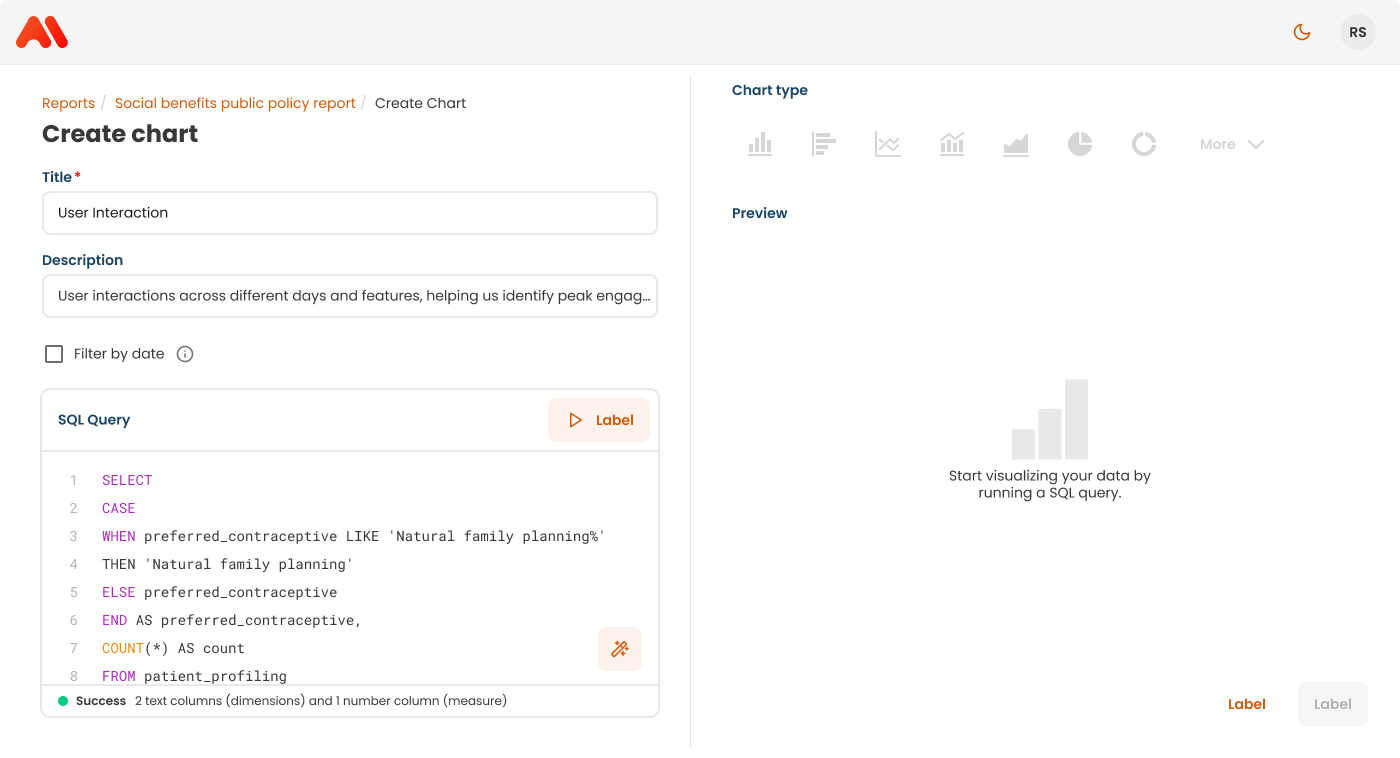
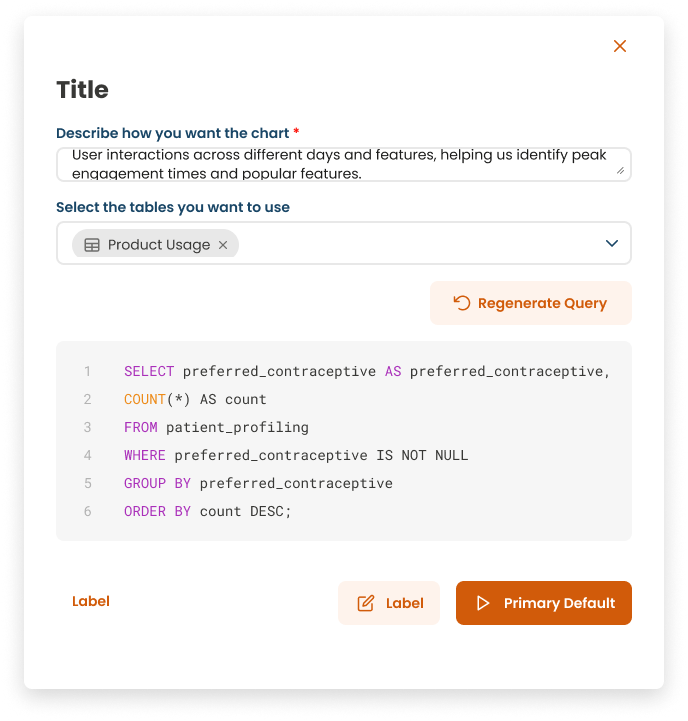
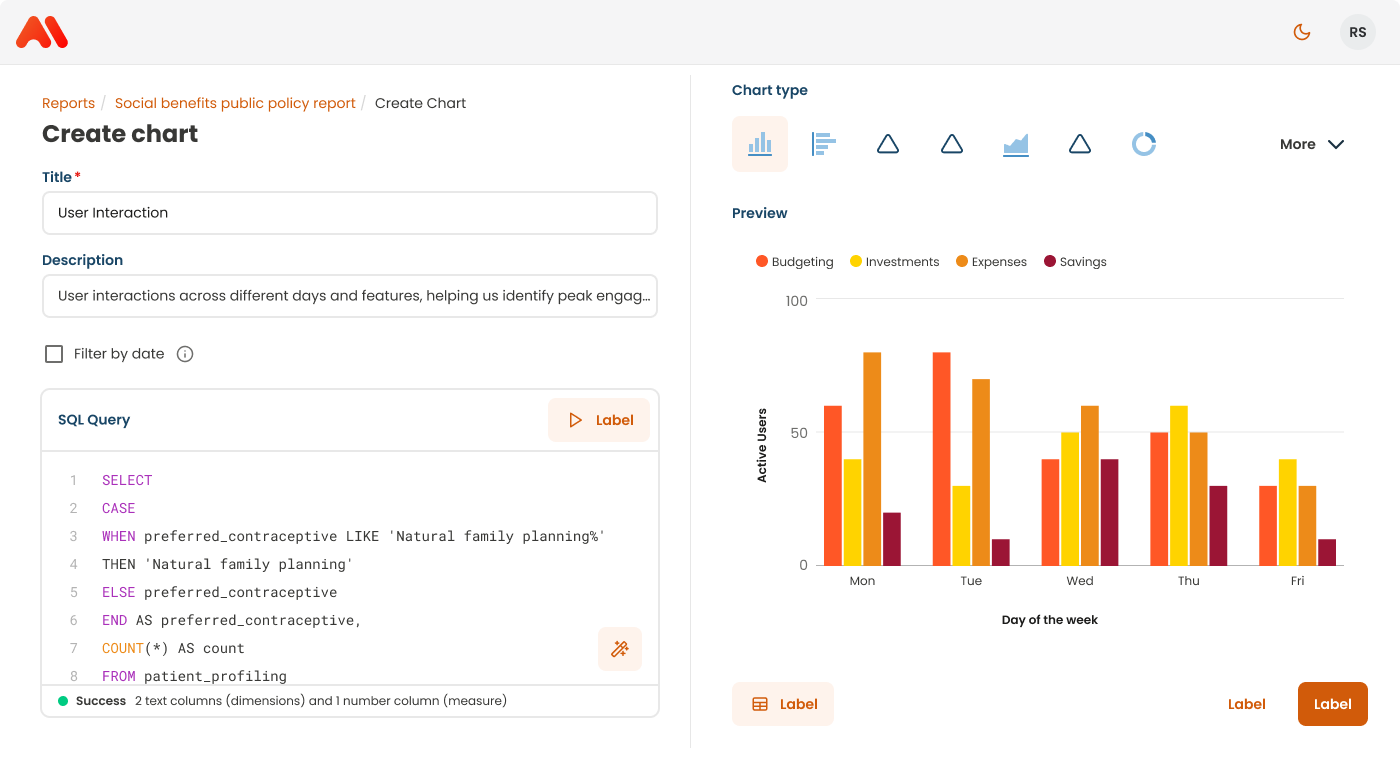
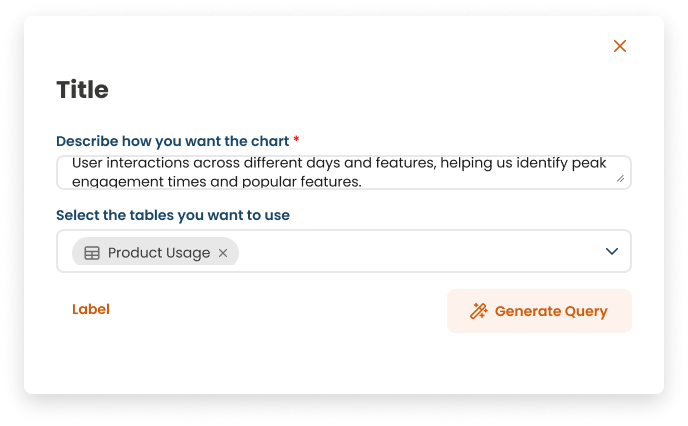
Introduced natural language-to-SQL query builder with query preview and confidence scoring.
Enabled inline chart editing with logic validation, editable data sources, and privacy tooltips.
Impact: Increased trust in analytics and boosted dashboard adoption by non-technical roles (up from 22% to 61%).
Customization Without Complexity
Enabled dynamic chart blocks, drag-and-drop dashboard assembly.
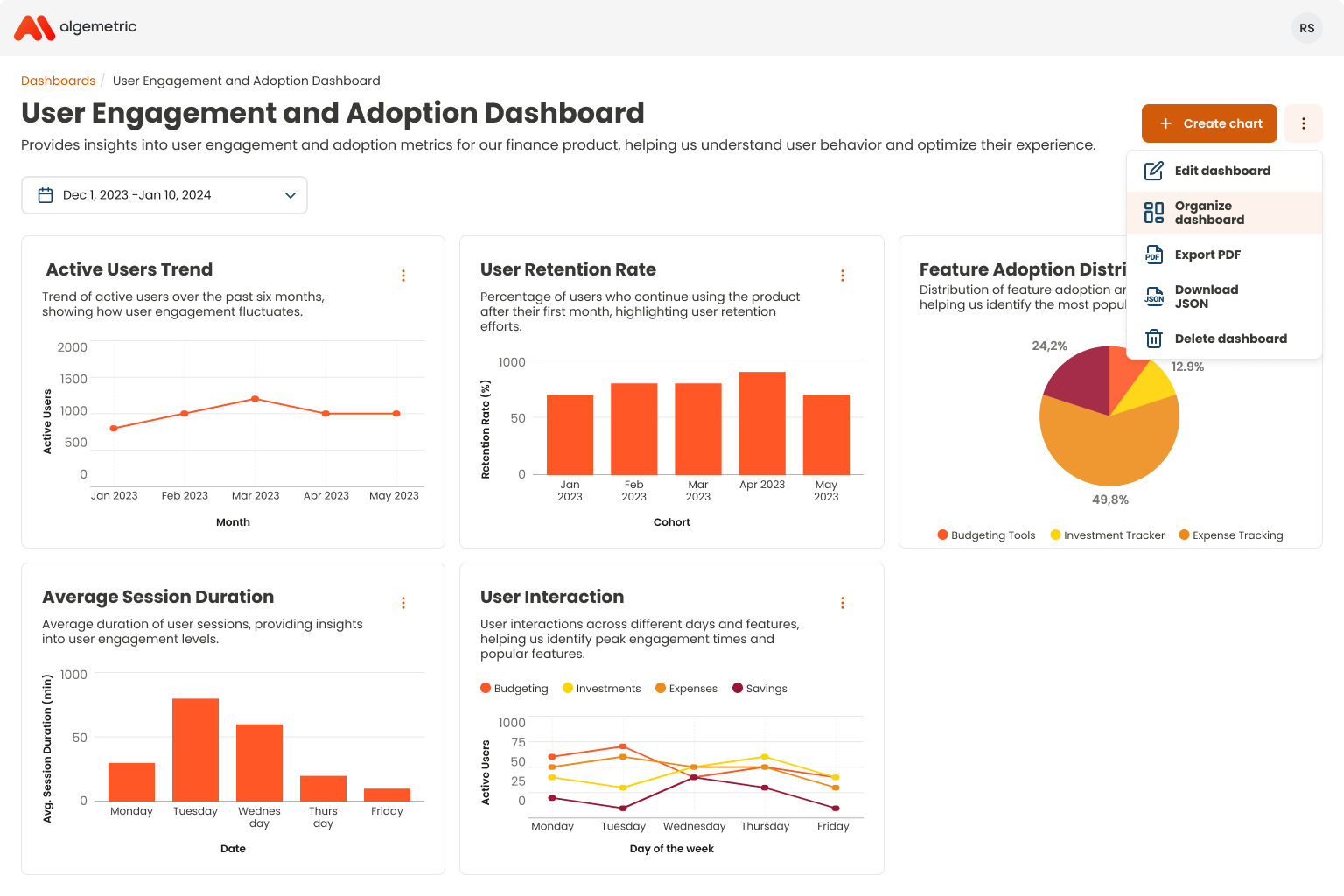
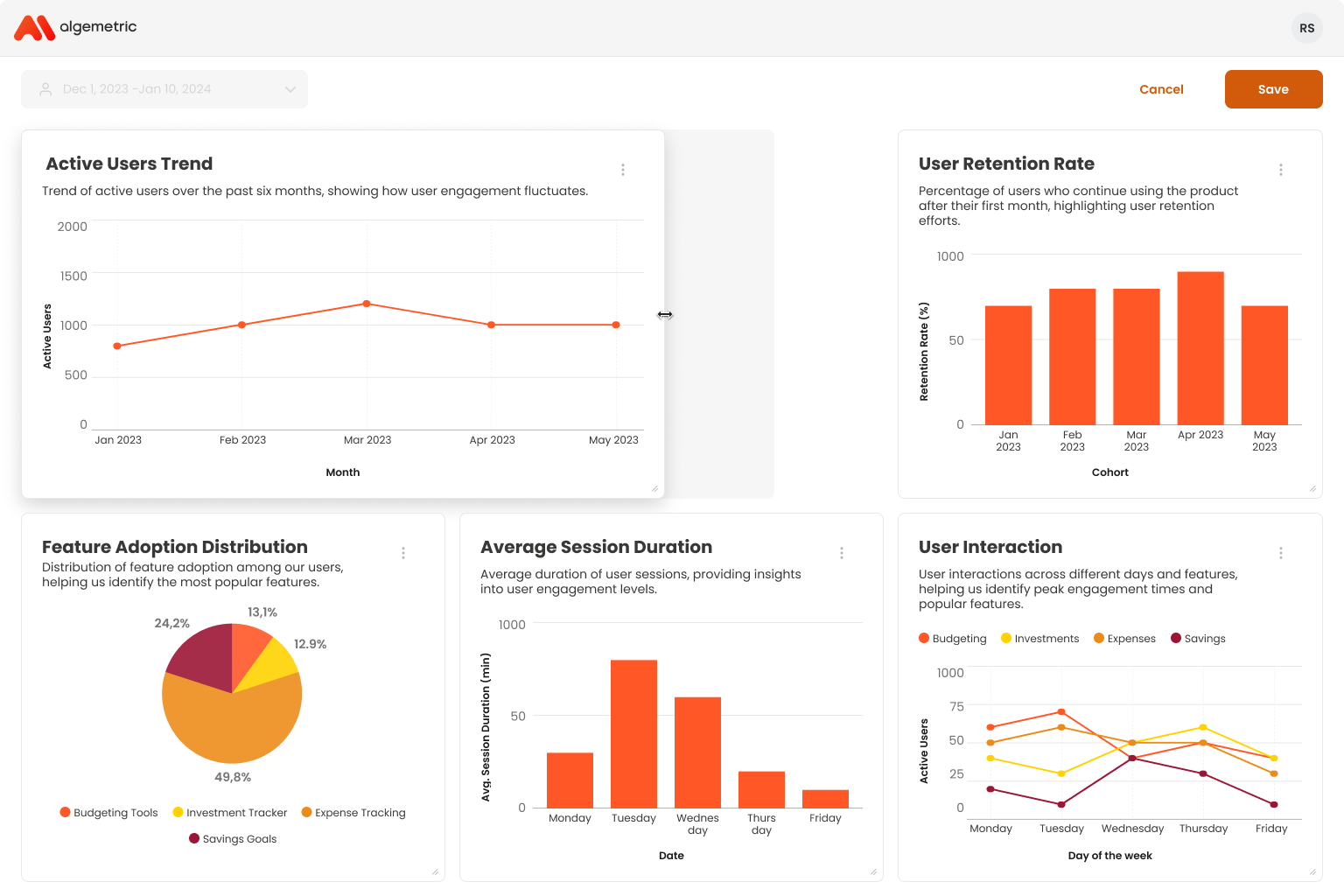
Impact: Reduced reliance on technical support teams and allowed users to generate insights 65% faster.
These design interventions transformed complex workflows into approachable, compliant experiences — giving teams speed, clarity, and confidence in every click.
Outcome
The redesigned secure analytics experience delivered measurable results across efficiency, adoption, and user trust:
Faster Time-to-Insight: Users reported a 60% reduction in time spent creating dashboards and running queries, due to guided sync flows and natural language interfaces.
Expanded Access: Adoption by non-technical users increased by 3×, enabling broader cross-functional insight generation across compliance, product, and executive teams.
Boosted Trust in AI Outputs: Visual encryption indicators and explainable query previews reduced hesitation in AI-generated reports, contributing to a 35% increase in decision-making confidence.
Seamless Compliance: Teams were able to meet internal audit and GDPR/HIPAA standards with zero engineering overhead—thanks to built-in privacy governance tools.
These results validated the design approach and laid the groundwork for scaling privacy-preserving analytics across regulated industries.